

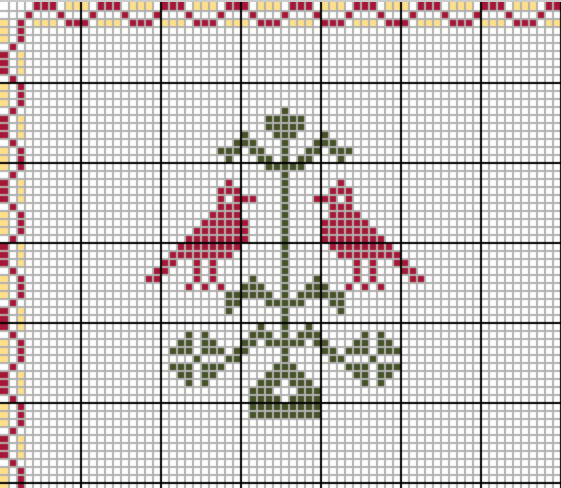
Do you want to embroider according to Sweden's oldest, or at least the oldest known preserved cross stitch embroidery?
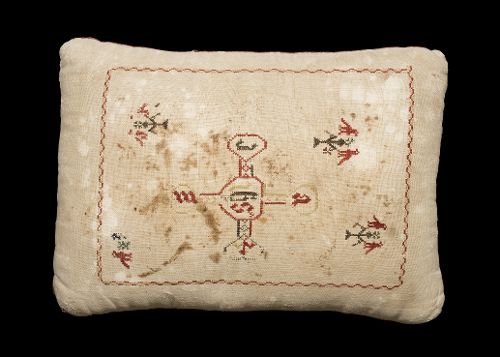
This pillow with birds, the tree of life, and a religious motif was embroidered for Åsby Church in Östergötland around the latter half of the 16th century.
The pillow is made of undyed linen and embroidered in red, yellow, and dark green silk.
The embroidered text in the cross read IHS and Mari clearly indicating that it is ecclesiastical work.
(IHS is an abbreviation for Jesus, or Iesus Hominum Salvator – “Jesus, Saviour of Mankind”). The back piece is empty.

Recreating a pattern
I want to be clear that I am not a textile historian.
What I have done is searched for the item in the Historical Museum's database; gone through pattern books and motifs from the period,
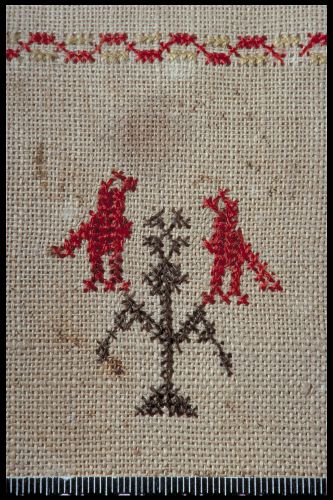
and compared photos of textiles to find the yarn colors I believe fit best (since the yarns have changed color over the years).
I did this purely for the joy of discovery; it has truly felt like a treasure hunt!
The pattern is not a stitch-for-stitch reproduction of the embroidery; I have had to make my own interpretations and judgments.
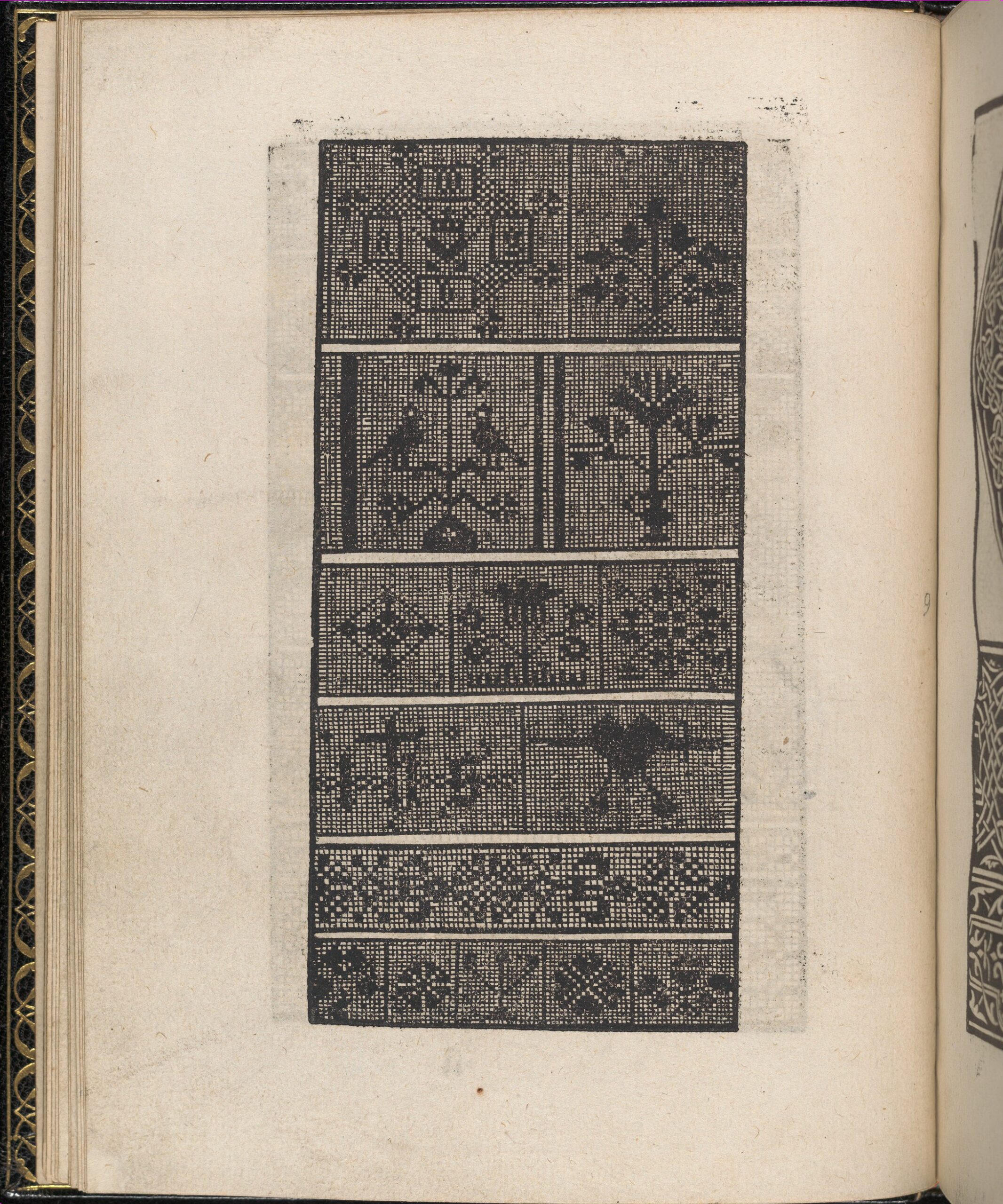
I managed to find a model for the birds, the frame, and similar letters in the German pattern book
”Ein new kunstlich Modelbuch" published by Peter Quentel in 1544. The cross in the center I have tried to recreate based on the pillow itself.
How to use the pattern
Jag har försökt hålla mönstret nära originalstorleken på kudden som är 28cm bred och 40 cm lång. Storleken på ditt färdiga broderi varierar beroende på vilken väv du vill brodera på.
In this pattern, I have not included the area around the frame or the seam allowance for those who want to make a pillow.
The pattern does not include instructions for making a pillow.
The pattern also includes an alphabet. The alphabet contains the letters that were used in the pattern books and samplers of that time. The letters J, x, å, ä, and ö are missing.
You stitch the embroidery in cross stitch. For the alphabet, you also use three-quarter cross stitches and backstitch.
If possible, embroider with a silk embroidery floss on undyed linen.
In that case, use one strand. If you are stitching on Aida, especially the larger counts, use two strands for better coverage.
For this pattern, I have chosen:
- DMC 937
- DMC 756
- DMC 326
This embroidery pattern is licensed under: CC-BY.


