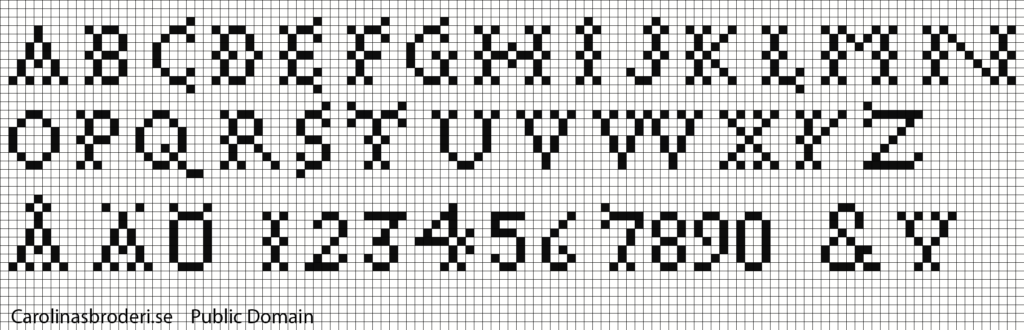
All cross stitch alphabets on this page are free to use.
License: Public domain.
You can stitch all the letters using full cross stitches. Most of the alphabets are suitable for beginners, although a few patterns are more advanced.
The alphabets have been sourced from older books or antique embroideries, and I have included information about the year and the author or publisher when available.
Often, the original designer of the embroidery pattern is unknown. Many early embroideries were based on the same German pattern books, which is why some alphabets look very similar. This is also why German-style letters often appear in Swedish pattern books.
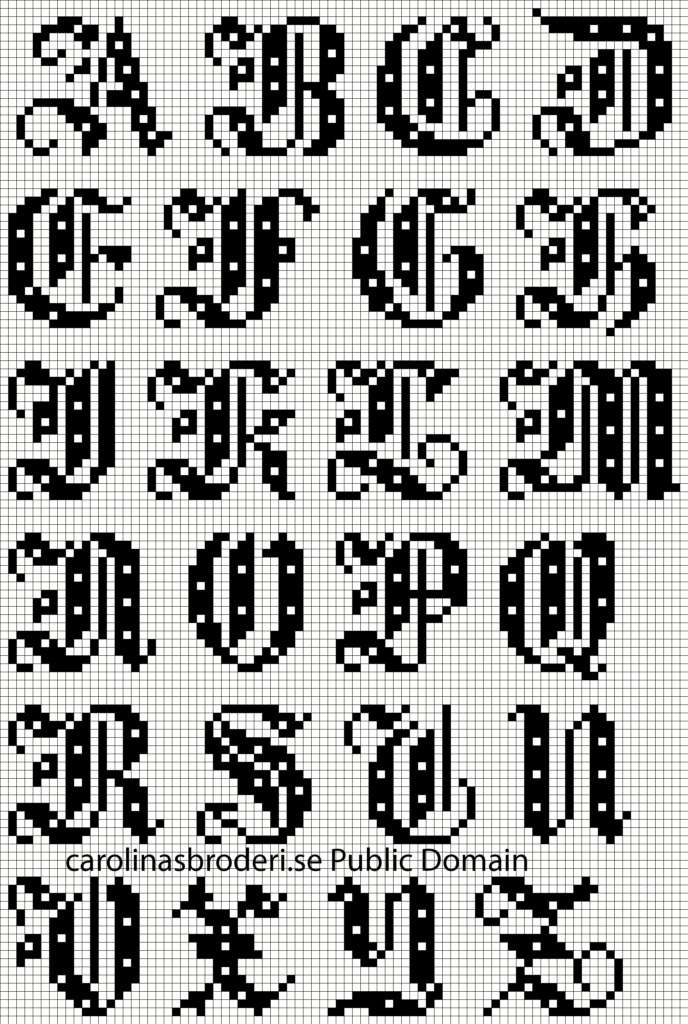
Keep in mind that older alphabets often lack the letters i, u or v, z, å, ä, and ö. When stitching, you can add dots yourself and use the letter J instead of I, as was commonly done in the past.
Peter Quentel
This cross stitch alphabet comes from the second edition of peter quentel’s german pattern book. Different sources list the publication date as somewhere between 1527 and 1544.
Bernhard Jobin
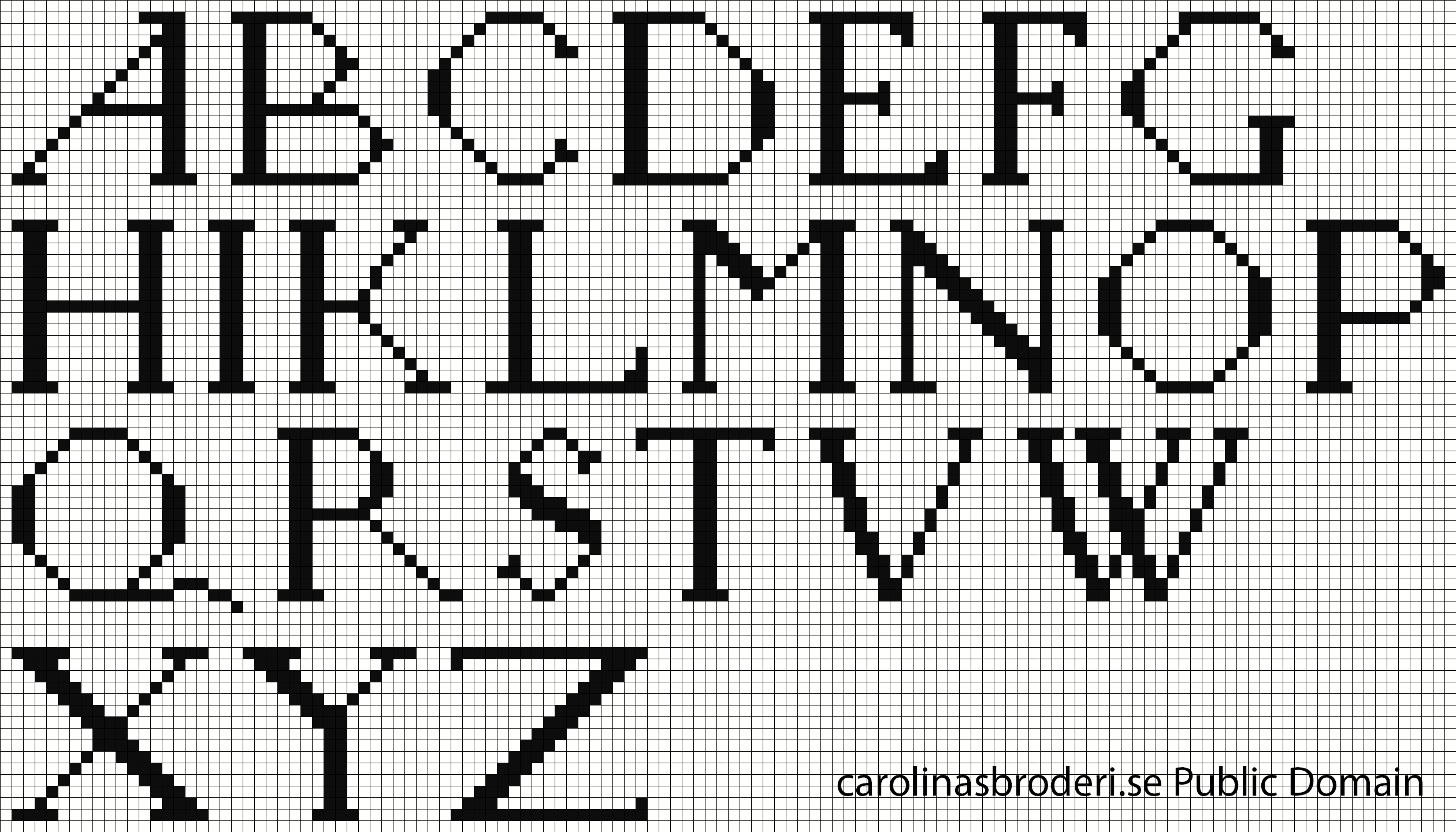
Pattern from a book printed in France around 1598. The letters and numbers have been reconstructed exactly as they appear in the original book, including irregularities and numbers in different sizes.
Tobias Arnold
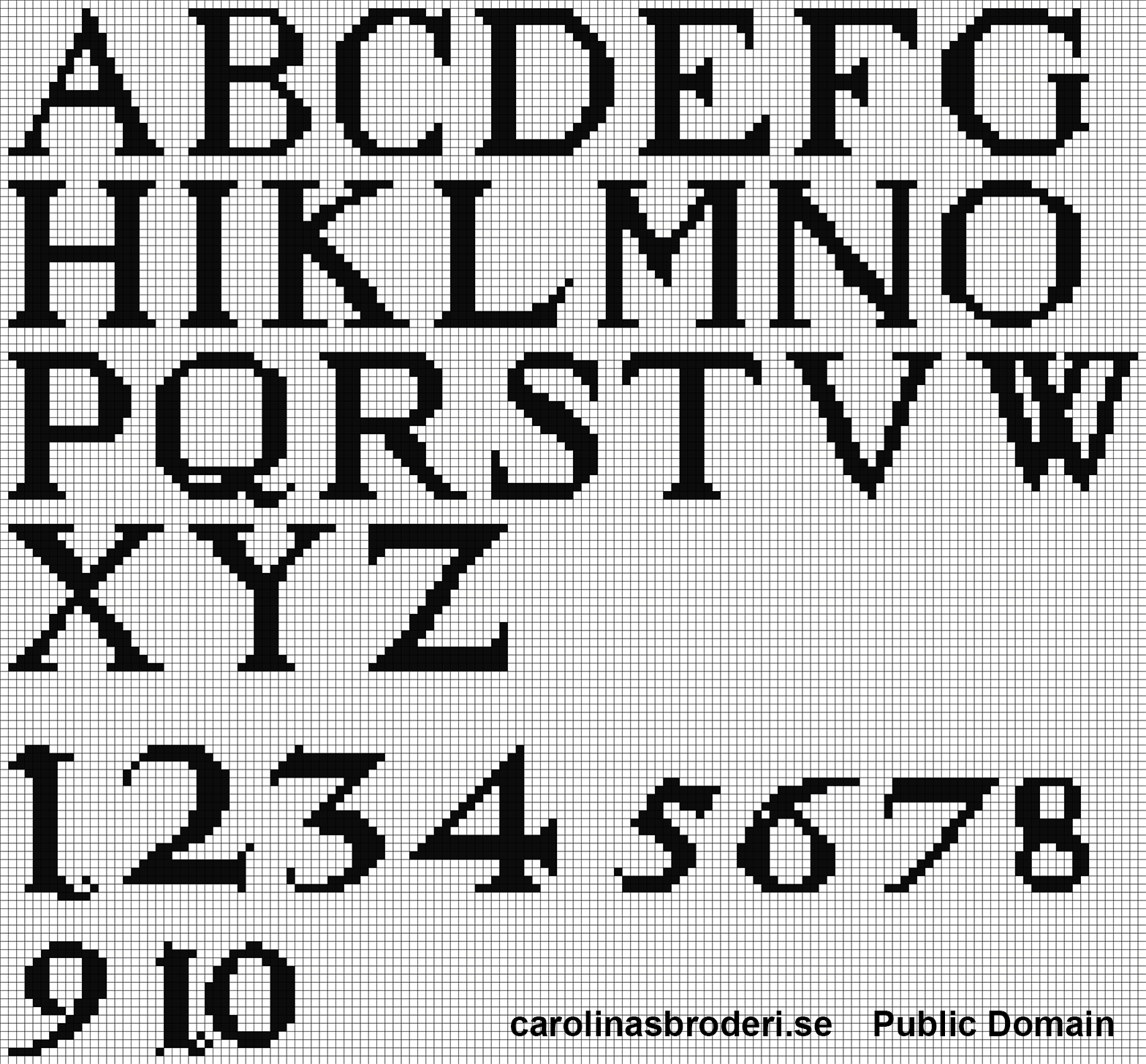
Cross stitch alphabet from 1825, Germany. The pattern was filled in by hand in a pattern book, possibly traced from an older alphabet.
Syskonen Ekenmark
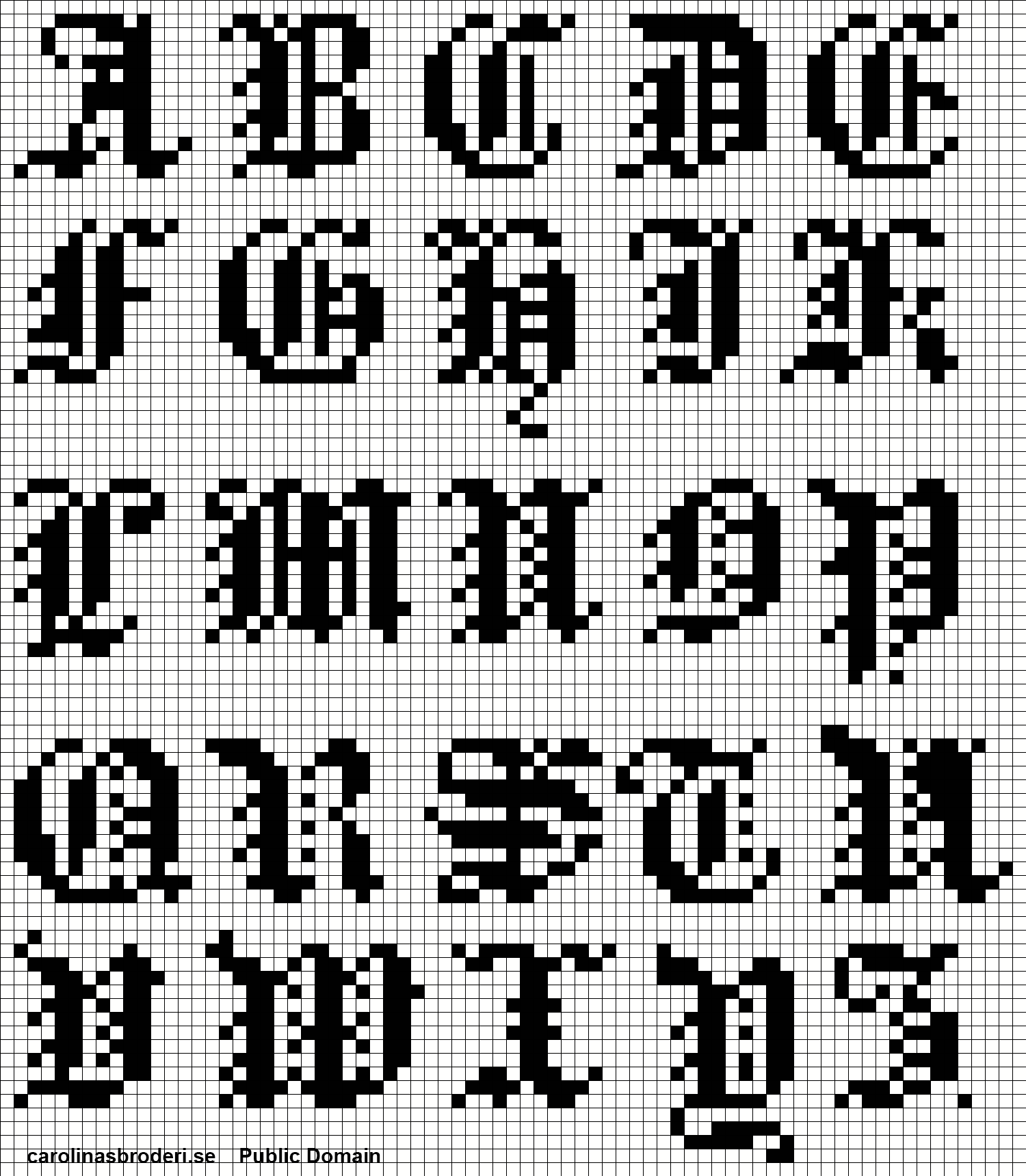
The Ekenmark family worked as textile artists and teachers and published several books about weaving. I have converted some of these weaving patterns from 1828 into cross stitch:
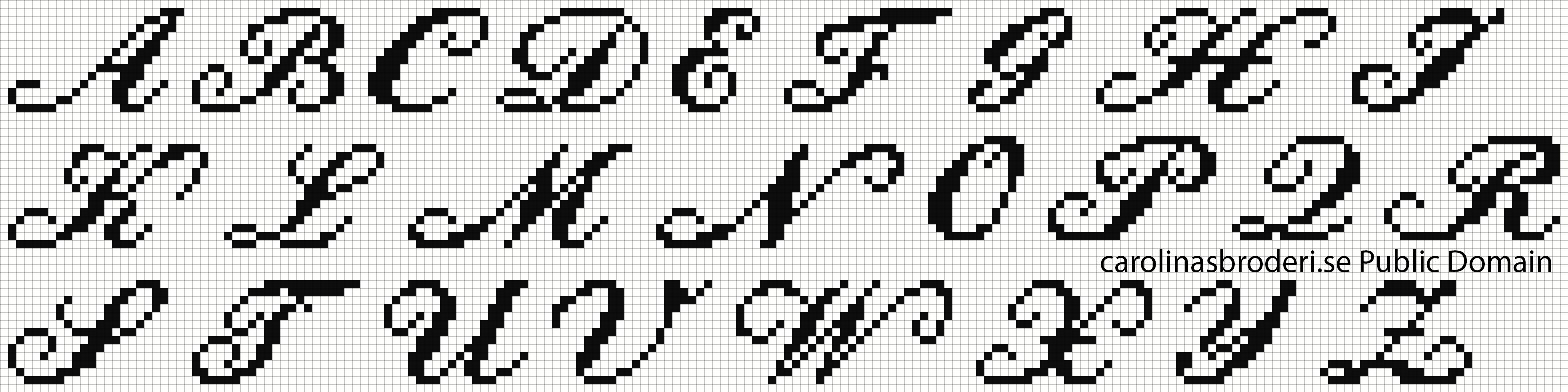
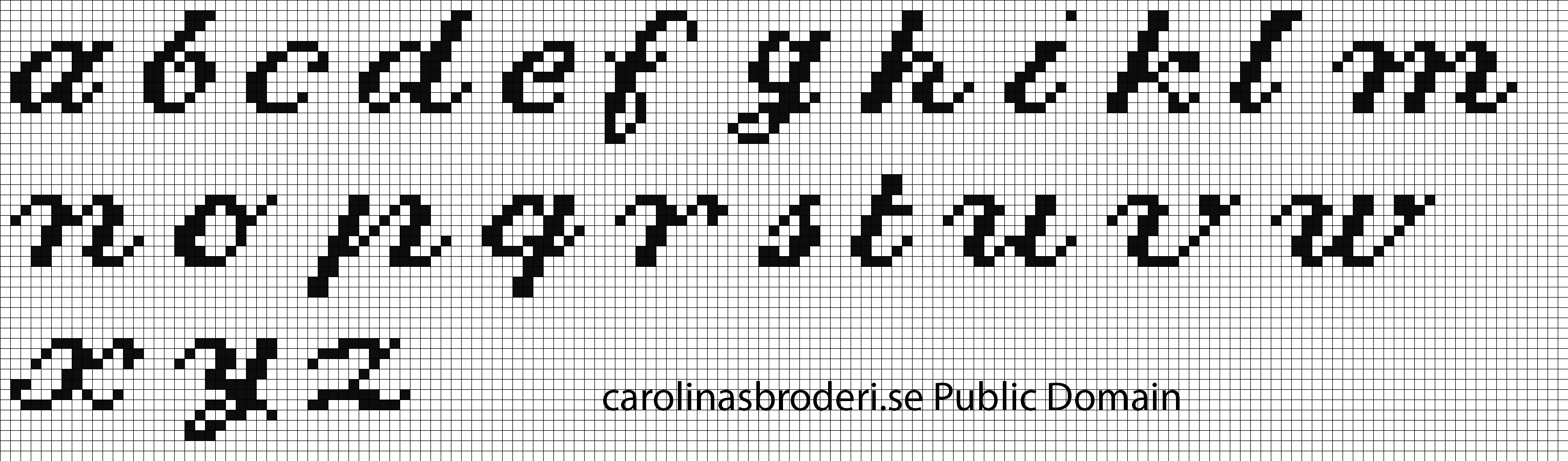

Hulda Lundin
Letters and numbers from the book Handledning i metodisk undervisning i kvinnlig slöjd (1924).
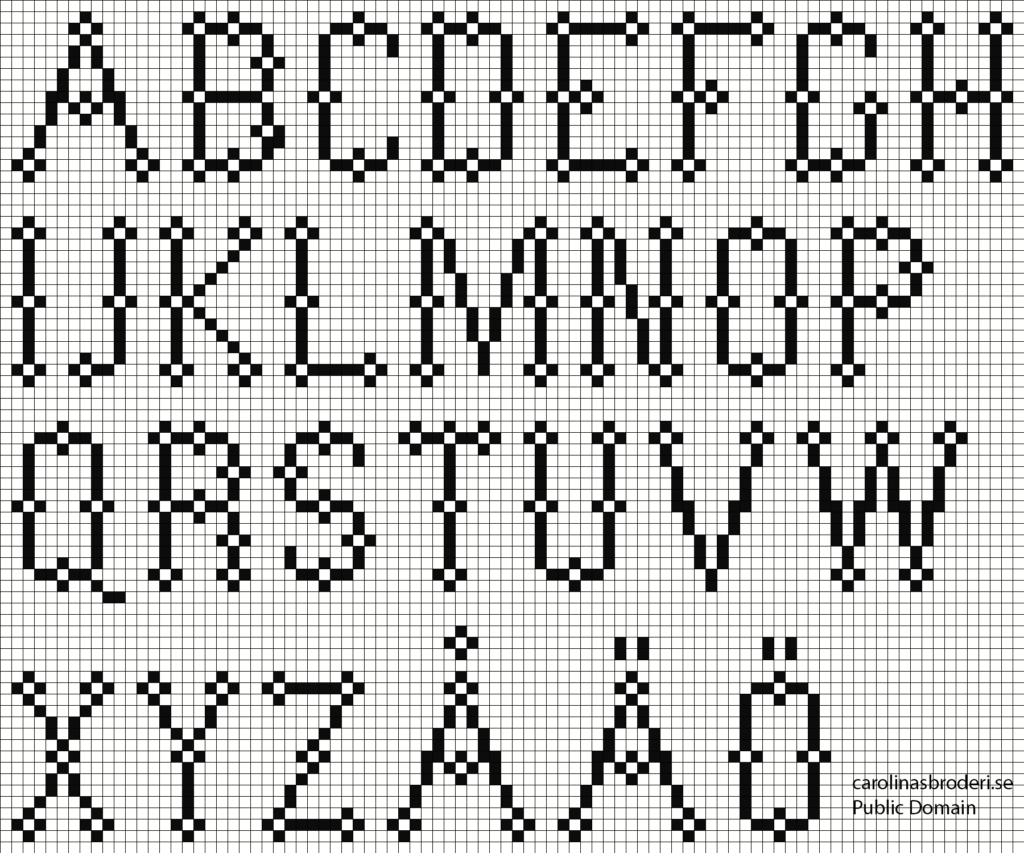
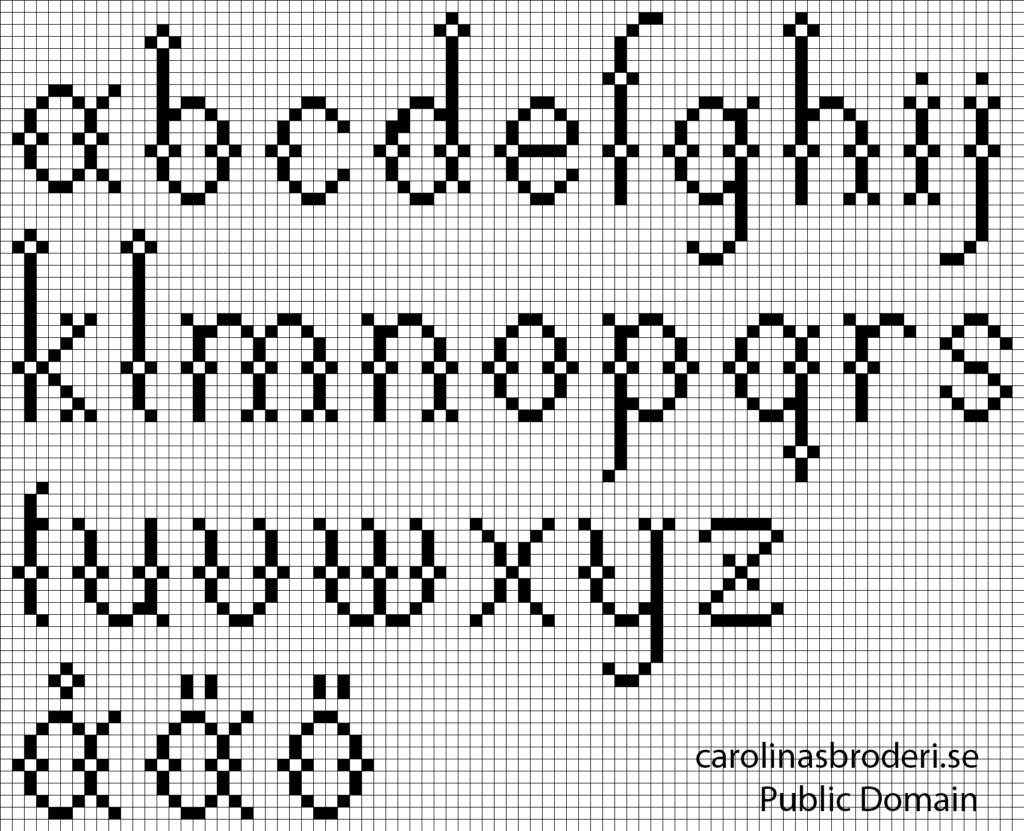

Unknown designers
Here I will add alphabets that do not have a known designer or publisher, or where it is not certain who stitched the original.
This alphabet has been recreated from a Swedish embroidery from 1847. I have added J, N, Q, U, Z, Å, Ä, Ö, 5, 7, 0, and &, which were missing in the original. I have also added an alternative Y, as I personally felt the original did not fit well with the rest of the alphabet.